The Origin

Three paths.
One destination.

A family rooted in botanical pharmacy. A system that failed the people it was supposed to serve. And a friend who deserved better options than the ones available to him. This is where Kavamazing came from.

The Researcher

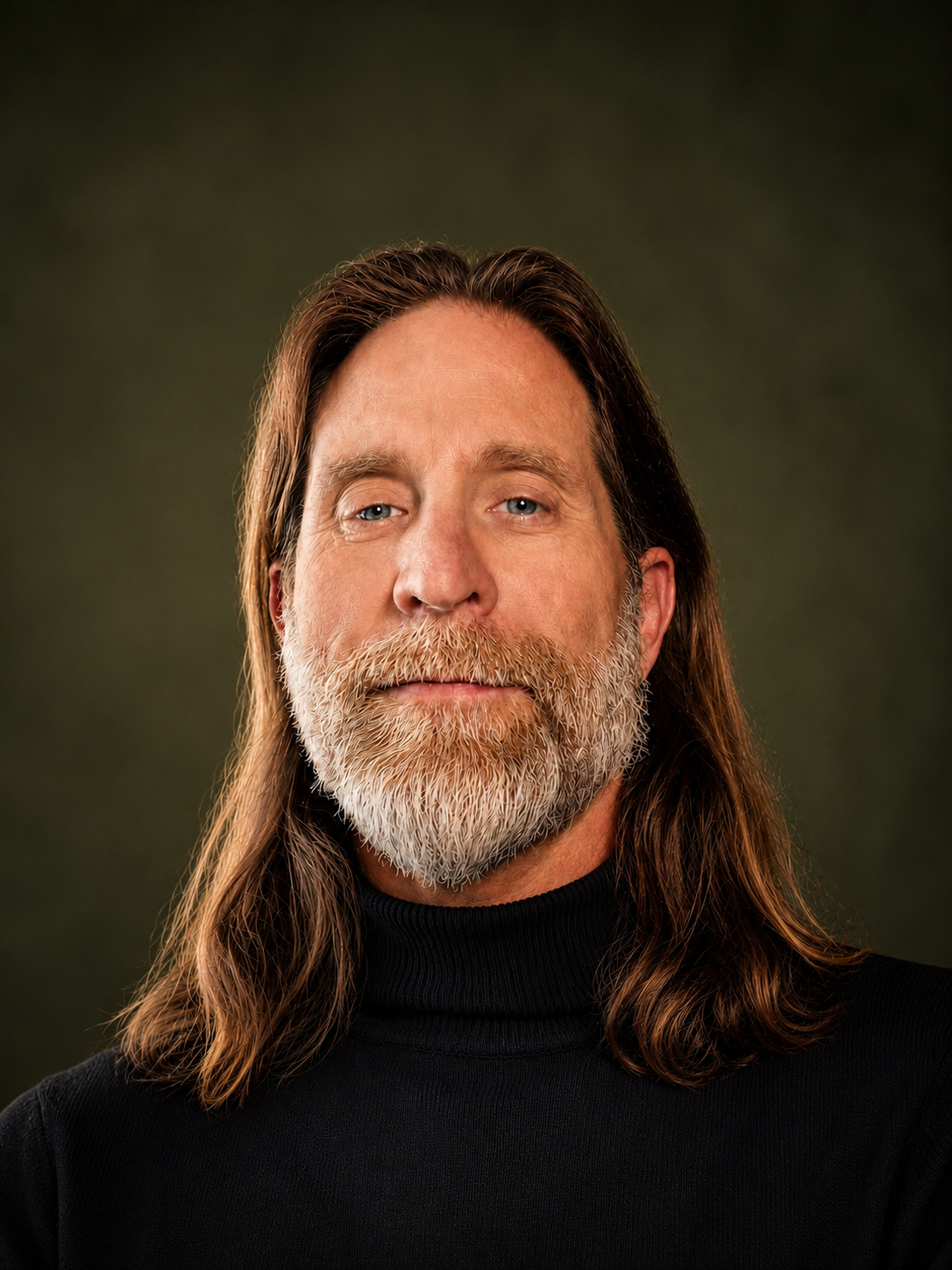
David L. Williams

Botanical Pharmacology and Applied Formulation Systems
Founder, Kavamazing™ & Sacred Paths™

Dave Williams entered the botanical and hemp industry with a background that didn't fit the typical supplement entrepreneur profile. Military training in the United States Submarine Force built a way of thinking that prioritized systems, structure, and the discipline of not accepting the simplified explanation when the complex one was more accurate.

His subsequent career in high-complexity reference laboratory marketing added diagnostic logic and analytical interpretation — skills that translate directly into the rigorous evaluation of botanical compounds and their mechanisms. A family deeply rooted in pharmacy and sustained independent study of pharmacology, pharmacognosy, and organic chemistry created the foundation for comparing plant-based compounds to pharmaceutical mechanisms with genuine depth.

When the 2018 Farm Bill opened the hemp market, Williams built Loving Botanicals around a single principle: every product must be personally tested, every manufacturer vetted, and every effect understood. That approach created a retail model closer to applied botanical evaluation than conventional supplement retail.

David L. Williams — Founder, Kavamazing™ & Sacred Paths™

Background

  • US Submarine Force — structural systems thinking
  • High-complexity reference laboratory marketing
  • Multi-generational pharmacy family background
  • Hemp industry legislative involvement
  • Botanical retail — Loving Botanicals founder
  • Independent researcher, pharmacology & pharmacognosy
  • Trademark holder: Kavamazing™, Sacred Paths™
01
Thread One — The Family Legacy

Pharmacy used to mean something different.

A family tradition that remembered what the discipline was built on.

Williams comes from a family of pharmacists — practitioners who trained and worked in an era when the discipline was rooted in botanical knowledge. When a pharmacist understood that willow bark yielded aspirin, that foxglove yielded digitalis, that the cinchona tree yielded quinine. When the plant was the starting point, and the scientist's role was to understand it, isolate it, and make it reliably accessible — not to replace it.

That tradition shifted across a generation. The modern pharmaceutical model is built around patentable synthetic compounds — molecules engineered to interact with specific receptors, designed to mimic what nature already figured out, then protected from replication by intellectual property law. The economics of drug development require a molecule that can be owned. You cannot patent a plant. So the industry builds analogues: synthetic structures that bind to the same receptor, produce a measurable effect, and can be manufactured, standardized, and sold at scale.

The result is a system that is extraordinarily effective at certain things and structurally incapable of others. What it cannot do is preserve the matrix. Nature does not deliver a single receptor-active compound. It delivers a system — compounds in ratios, with co-factors, in biological forms that evolved alongside human physiology over thousands of years. Synthetic pharmacology isolates the signal and discards the context. Sometimes that works. Often it produces side effects that require additional compounds, which produce additional side effects, in a cascade that moves steadily further from the original biological condition.

Pharmacy began with plants. The pharmaceutical industry moved away from them not because plants stopped working — but because plants cannot be patented. That distinction shaped an entire century of medicine. And it shapes what Kavamazing is built to challenge.

Williams grew up understanding both sides of that transition — the botanical tradition his family practiced and the synthetic model that replaced it. That dual perspective shaped how he approaches the question of what a therapeutic compound is actually supposed to do, and why preservation of the natural system might matter more than isolation of the active molecule.

02
Thread Two — The System

The system that was supposed to help wasn't built for the kind of help that was needed.

What happens when the only tools available are the wrong ones.

Williams served in the United States Submarine Force. His exposure to the VA system — and his sustained observation of how it manages the mental and physical realities of veterans — revealed a structural problem that goes beyond funding or staffing or political will. The VA's therapeutic model is built on the same synthetic pharmacology framework that dominates all of modern medicine: identify the diagnosis, prescribe the compound, manage the side effects. For acute physical injury, it can be excellent. For the layered, interconnected reality of mental health, chronic pain, addiction, social isolation, and the neurological effects of sustained high-stress service, it is systematically inadequate.

The problem is not that the VA doesn't care. It's that the tools available within the standard-of-care model are not designed for what veterans actually need. What many veterans need is not a more precisely targeted receptor antagonist. They need something that addresses the nervous system as a whole system — that reduces the baseline anxiety load, restores the capacity for social connection, supports sleep without creating dependency, and manages the stress physiology of transition back to civilian life without adding new pharmacological burdens on top of existing ones.

The gap between what the system offers and what the person actually needs — that gap is where addiction often begins. Not because the person is weak or undisciplined, but because they are in genuine neurological distress and the only tools they have been given are inadequate. Alcohol fills that gap for many veterans. It works, temporarily. It reduces anxiety, softens social friction, makes sleep possible. And then it deepens every underlying condition until the person is managing both the original problem and the dependency simultaneously.

The VA experience didn't produce cynicism. It produced a specific question: what would it look like to treat the nervous system as a system, with botanical compounds that work the way nature designed them to work, without creating new dependencies in the process of addressing old ones?

That question became part of the intellectual foundation of Kavamazing — and part of why the platform is built around a compound that has a 3,000-year safety record, no dependency profile, and a peer-reviewed clinical trial showing significant anxiolytic effects with zero withdrawal upon cessation.

Thread Three — The Loss

Why this actually started.

In 2024, Dave lost one of his closest friends to suicide following a relapse on alcohol. Five weeks later, he lost another.

Both had been sober for months. Both were fighting. Both lost.


His friends were not statistics. They were people Dave knew deeply — people who had fought hard, who had periods of genuine recovery, who were trying to self-medicate and regulate how they felt in the absence of better options. The alcohol was doing something real for them. It was reducing anxiety, softening the edges of something that felt unmanageable, making social interaction possible when the underlying neurological state made it feel impossible.

The problem wasn't that it worked. It was that it worked the way alcohol works — temporarily, dependently, and with a neurochemical cost that deepens the underlying condition every time it is used. Alcohol is a CNS depressant. The relief it provides in the short term it extracts with compound interest over time. For someone already managing anxiety, trauma, and mental health challenges, alcohol is not a solution. It is an acceleration of the underlying problem dressed as temporary relief.


The question that followed was not abstract. It was immediate and personal: What should they have had instead?

Not a prescription with a dependency profile and a withdrawal risk. Not a therapy model that requires months of wait time and doesn't address the neurological reality of what they were feeling in real time. Something that actually worked — that produced the social ease, the anxiety reduction, the ability to be present without the edge of neurological distress — without the cost that alcohol eventually extracts.

That question became a crusade. Not a business plan. A search for what actually exists, what the science actually supports, and what could be made available to the people who need it most.


That's also why Dave chose to be the founder and lead the educational mission of this platform rather than own it as a conventional business. The goal was never a product launch. It was a contribution — to the science, to the conversation about what genuine alternatives to alcohol and synthetic pharmacology can look like, and to anyone who needs something that actually works without the cost that inadequate alternatives eventually extract.

This is dedicated to the two people he lost. And to the ones still fighting.

If you or someone you know is struggling with alcohol dependency, addiction, or thoughts of suicide, you are not alone. Please reach out.

988 Suicide & Crisis Lifeline — call or text 988, available 24 hours a day, 7 days a week
SAMHSA National Helpline1-800-662-4357 for substance use and mental health support, free and confidential
Where the Three Paths Meet

The same destination from three different directions.

A family tradition that remembered what pharmacy was built on — plant-based APIs, botanical systems, the intelligence of the natural matrix. A frustration with a medical system that treats the nervous system with synthetic compounds designed for patent law rather than human biology. And the loss of two close friends to a problem that better natural alternatives might have helped address.

These three threads did not converge by accident. They reflect a consistent underlying question that Williams has been asking, from different angles, for most of his adult life: what does it look like to treat the human nervous system with compounds that work the way nature designed them to work?

The answer, as the peer-reviewed pharmacological literature makes increasingly clear, looks a great deal like what Pacific Island cultures have been doing with kava for 3,000 years. A cold-water aqueous preparation of noble cultivar rootstock, delivering a coordinated five-receptor pharmacological system at low doses, producing the functional effect profile that the modern pharmaceutical model has been trying to synthesize and patent for decades — without the dependency, without the withdrawal, without the hepatotoxicity of the solvent-extracted commercial products that abandoned the traditional preparation in pursuit of a higher number on a label.

Kavamazing did not begin with a market opportunity. It began with a question that three different life paths had been asking simultaneously. The science answered it. The platform is the answer made available.
The Discovery

The extract that didn't behave the way it was supposed to.

Through his work in hemp industry legislative and compliance circles, Williams connected with Matthew Guenther of Chemical.Legal — one of the most rigorous chemical-regulatory analysts in the space. Matt later introduced Williams to James Armitage, whose proprietary Vanuatu aqueous kava extract had been decades in development. Armitage had the source material and the reduction methodology. He needed a product pathway.

Williams evaluated the extract the way he evaluates everything: directly, carefully, with a willingness to follow the observation wherever it went. What he found was a material that didn't match any commercial kava product he'd encountered. At approximately 20 mg total kavalactones per serving, it produced clear, functional, calming effects — socially open, cognitively intact, without sedation — at a fraction of the dose associated with commercial products that produced heavier and less functional results.

The central question became the engine of everything that followed: If the dose is so low, why is the effect so clean and so pronounced?

The answer pointed consistently to one variable: the extraction method. The Vanuatu preparation used cold water — the same method Pacific Island cultures have used for 3,000 years. It preserved a matrix. And that matrix, the peer-reviewed analytical literature confirmed, is not incidental to kava's pharmacology. It is constitutive of it.

That observation became a research manuscript. The manuscript became a brand. The science required the intellectual honesty to disclose the commercial interest while presenting the scientific argument on its merits — because the argument stands on its own, and it deserves to be evaluated that way.

The Collaborators

A closed-loop system of domain experts.

This platform was not built by a single person or a marketing department. It represents the convergence of domain experts who each control a different, non-overlapping part of the system.

James Armitage
Strategic Partner — Source & Extraction

Kava industry pioneer who developed modern aqueous instant kava extraction in 1998. Co-creator of Lava Cola. Founder of Prime Kava. Provides access to the proprietary Vanuatu aqueous extract and traditional cold-water reduction methodology that forms the foundation of the Kavamazing extract standard.

Matthew Guenther
Chemical.Legal — Regulatory Architecture

Chemical-regulatory analyst specializing in controlled substance interpretation, analogue law, isomeric structure, and dietary supplement positioning. Provided the compliance architecture connecting the Vanuatu source material to a North American regulatory pathway. Compliance built in from the beginning, not retrofitted after the fact.

Volunteer Botanicals
Formulation & Delivery Systems Partner

Advanced delivery systems: Rapidose™ water-based microemulsions, pharmaceutical-grade powders, tablets, and capsules. Actively translating the aqueous kava extract into modern consumer delivery formats without losing the matrix integrity that makes the extract function. Sacred Paths stack formulation partner.

Seventh Hill CBD
Edible Craftsmanship & Artisan Partner

Premium handcrafted edibles from Springfield, Oregon. Organic ingredients, artisan caramels and gummies, and the consumer sensory excellence that turns a technically correct formula into a product worth repeating. Kavamazing gummy and caramel production partner.

The Platform

Kavamazing and Sacred Paths.

The discovery of matrix-dependent behavior led directly to the development of a two-tier platform. The extract became Kavamazing™ — the matrix-preserved aqueous kava standard in its most direct, consumer-facing form. The architectural framework for building targeted botanical outcomes on top of that base became Sacred Paths™ Botanical Wellness — a premium system of formulation stacks, each designed to stabilize the nervous system first, then direct it toward a specific functional outcome.

Kavamazing is the on-ramp. Sacred Paths is the destination. Together they represent the same answer — to the family legacy question, to the VA question, and to the personal question that followed the losses of 2024 — expressed in two different formats for two different consumer relationships.

Both brands are registered trademarks of David L. Williams in the United States. The scientific manuscript underlying both is under preparation for submission to the Journal of Ethnopharmacology.

This platform was not created by a marketing department. It emerged from a loss, an observation, a scientific question, and three decades of asking what it looks like to treat the human nervous system with compounds that actually work — the way nature designed them to.